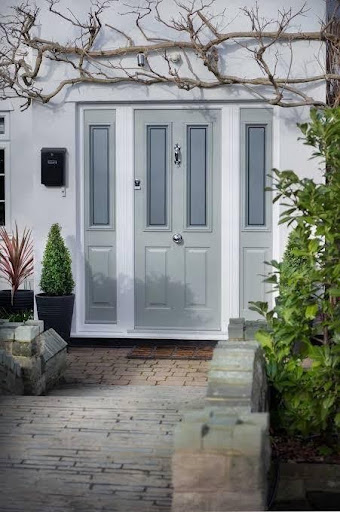
Your front door is one of the first things people notice about your home. It sets the tone for the rest of the property, adds to your kerb appeal and, perhaps most importantly, helps keep your home warm, secure and protected from the unpredictable British weather.
So, if your current front door is looking a little tired, letting in a draught or simply no longer feels right for your home, it could be time for an upgrade.
That’s where composite doors come in.
Over the last few years, composite doors have become an increasingly popular choice for homeowners across the UK. They offer the traditional appearance many people want from a front door, while combining it with modern materials and technology designed to improve security, insulation and everyday performance.
But what actually makes composite doors different? Are they worth the investment? And what should you look for when choosing one? Let’s take a closer look.

What Is a Composite Door?
As the name suggests, a composite door is made using a combination of different materials rather than a single material.
While the exact construction can vary depending on the manufacturer, a typical composite door features a solid core, a durable outer skin and other components designed to provide strength, insulation and resistance to the elements.
The result is a door that is designed to do much more than simply look good.
A quality composite door can offer:
- Excellent thermal insulation
- Strong resistance to everyday wear and tear
- Enhanced security
- Protection from rain and wind
- A wide choice of colours and designs
- Minimal maintenance
- A long-lasting finish
And perhaps one of the biggest attractions is that you don’t necessarily have to compromise on appearance to get all those practical benefits.
Why Are Composite Doors So Popular?
There’s a reason composite doors have become such a common sight on UK streets.
Traditional timber doors can look fantastic, but they may require regular maintenance and can be affected by moisture and changing temperatures. Older uPVC doors, meanwhile, can sometimes lack the solid feel and character that homeowners are looking for.
Composite doors sit somewhere in the middle, giving you the attractive appearance of a traditional door with many of the performance benefits associated with modern door technology.
For homeowners who want something that looks good without creating a long list of maintenance jobs, this can be a particularly appealing option.
1. Improved Home Security
Security is probably one of the first things that comes to mind when choosing a new front door.
After all, your front door is one of the main access points into your home.
Modern composite doors are designed with security in mind. Depending on the door and hardware you choose, features can include robust locking systems, reinforced construction and tough outer materials.
A well-fitted composite door should also feel reassuringly solid when you open and close it.
That doesn’t mean any door can make a home completely burglar-proof, no door can offer that guarantee, but choosing a well-made door with appropriate security hardware can form an important part of your home’s overall security.
2. Keep the Draughts Outside
Nobody wants to sit in their living room during winter and feel a cold draught coming through the front door.
Poorly insulated or ageing doors can be a weak point when it comes to keeping heat inside the home.
Composite doors are built with insulation in mind. Their solid construction can help reduce heat loss through the entrance, which can make your hallway and surrounding rooms feel more comfortable.
Of course, the overall energy performance of your home depends on much more than your front door. Windows, walls, roof insulation, heating and ventilation all play their part.
However, replacing an old, poorly performing door with a modern, well-insulated alternative can still make a noticeable difference to how your home feels.
3. A Style for Almost Every Home
One of the biggest misconceptions about composite doors is that they all look the same.
They don’t.
Whether your home is a traditional Victorian terrace, a modern new-build or a 1930s semi-detached house, there are plenty of styles available.
You can choose from different:
- Door colours
- Glazing options
- Panel designs
- Door furniture
- Handles
- Decorative glass
- Finishing details
Classic colours such as white, black and grey remain popular, while bolder shades can be used to make the entrance stand out.
For many homeowners, the front door is an opportunity to add a little personality to the outside of the property.
And sometimes, that’s exactly what a house needs.
4. They’re Designed for British Weather
Let’s face it, British weather isn’t exactly predictable.
One minute it’s bright sunshine, the next you’re dealing with heavy rain and strong winds. Then there’s the cold, damp weather that seems to hang around for weeks.
A front door has to cope with all of it.
Composite doors are designed to withstand everyday exposure to the elements. Their construction means they are generally resistant to problems such as rotting and warping that can affect traditional timber doors when they aren’t properly maintained.
That’s particularly useful if your front door is exposed to driving rain or gets very little shelter.
A good-quality installation is important here, too. Even the best door won’t perform as intended if it isn’t fitted correctly.
5. Low Maintenance Means More Time for
Nobody gets excited about spending their weekend maintaining a front door.
With timber doors, regular painting, staining or other maintenance may be necessary depending on the finish and the conditions they’re exposed to.
Composite doors are generally much easier to look after.
In most cases, keeping the surface clean with suitable cleaning products and carrying out occasional checks on the hardware is enough to keep the door looking its best.
That makes them particularly attractive to busy homeowners who want a door that doesn’t demand constant attention.
What Should You Consider Before Buying a Composite Door?
While composite doors offer plenty of advantages, it’s worth doing your homework before choosing one.
Not all composite doors are identical, and the cheapest option isn’t necessarily the best option for your home.
Here are a few things worth considering.
1. Door Quality
Look at how the door is constructed and what materials are used.
A reputable manufacturer should be able to provide clear information about the door’s specifications, security features and performance.
Don’t be afraid to ask questions.
2. Security Hardware
The door itself is only one part of the security equation.
The locking system, hinges, frame and installation all matter.
Ask about the security hardware included with the door and whether it has been independently tested or certified where applicable.
3. Energy Performance
If improving insulation is one of your reasons for replacing your door, pay attention to its thermal performance.
Ask about the door’s U-value and any relevant energy-efficiency information rather than simply relying on phrases such as “highly insulated”.
4. Installation
This is a big one.
A high-quality door that has been poorly installed may not perform as it should.
Make sure you’re dealing with an experienced installer and ask what guarantees are provided for both the product and installation.
5. Design
Don’t rush this part.
Your front door can have a surprisingly big impact on the overall appearance of your property.
Think about how the colour, glazing and door furniture will work with your existing windows, brickwork and exterior.
Composite Doors vs uPVC Doors
So, how does a composite door compare with a uPVC door?
Both can be good options, but they have some differences.
Composite doors are generally known for their solid construction, realistic traditional appearance and combination of materials.
uPVC doors are often lightweight, practical and can be a more budget-friendly choice.
For homeowners who want a heavier, more substantial door with a wide range of traditional and contemporary designs, composite doors can be particularly appealing.
However, the right option depends on your property, budget, security requirements and personal preferences.
There isn’t a single door that’s perfect for every home.
Composite Doors vs Timber Doors
Timber doors have been used for centuries, and there’s a reason they remain popular.
Natural wood has a warmth and character that is difficult to replicate.
However, timber can require more maintenance, particularly when exposed to rain, moisture and changing temperatures.
Composite doors can provide a similar traditional appearance while requiring considerably less day-to-day maintenance.
For homeowners who love the look of timber but don’t want the upkeep, a composite door can offer an attractive compromise.
How Much Do Composite Doors Cost?
The cost of a composite door can vary considerably.
The final price will depend on factors such as:
- Door style
- Size
- Colour and finish
- Glazing
- Door furniture
- Locking system
- Frame
- Installation
- Manufacturer
It’s worth getting several quotes rather than choosing a door based purely on the headline price.
Remember that you’re not just paying for the door itself. You’re also paying for the frame, hardware, installation and, potentially, guarantees and aftercare.
A cheaper door may look attractive initially, but if you’re replacing your front door with the intention of keeping it for many years, long-term quality and installation are worth considering.
Do Composite Doors Add Value to Your Home?
This is a question homeowners often ask.
A new front door can certainly improve the appearance of a property and may contribute to a better first impression when the house is viewed by potential buyers.
However, it’s difficult to say that installing a composite door will automatically add a specific amount to your home’s value.
Property value depends on a huge range of factors, including location, condition, size, market conditions and buyer demand.
Think of a composite door as an investment in the appearance, security, comfort and usability of your home rather than a guaranteed way to increase its selling price.
Choosing the Right Colour
This might sound like a small decision, but your door colour can completely change the character of your home’s exterior.
A traditional black or dark grey door can create a smart, timeless appearance, while lighter colours can give a property a softer and more welcoming look.
If you want something different, there are plenty of bolder options available.
Before deciding, consider the colours already used around your property.
Look at your:
- Window frames
- Brickwork
- Roof
- Garage door
- Fascia and soffits
- Exterior walls
You don’t necessarily have to match everything perfectly. In fact, a little contrast can make the entrance much more interesting.
Don’t Forget the Glass
Glazing is another way to personalise a composite door.
You could choose a simple clear or frosted panel, decorative glass, or a more traditional leaded design.
Privacy is obviously something to consider, particularly if your front door looks directly onto a pavement or neighbouring property.
The right glass can also become a feature in its own right, giving an otherwise simple door a distinctive appearance.
Is a Composite Door Right for Your Home?
For many homeowners, composite doors offer a practical combination of appearance, security, insulation and low maintenance.
They’re particularly worth considering if your existing door is:
- Showing signs of age
- Draughty
- Difficult to lock or close
- Damaged or warped
- Looking dated
- Requiring frequent maintenance
- Not providing the level of security you want
A new door can make your home feel different almost immediately.
There’s something surprisingly satisfying about opening your front door and feeling that solid, reassuring close behind you.
Final Thoughts
A front door might not be the biggest purchase you’ll make for your home, but it’s one you’ll use every single day.
That’s why choosing the right one matters.
Composite doors have become popular because they offer a balance between style and practicality. They can provide a strong, well-insulated entrance while giving homeowners plenty of freedom when it comes to colours, glazing and design.
The key is not simply to choose the cheapest door you can find. Look at the construction, security features, thermal performance, installation and reputation of the manufacturer and installer.
And, of course, choose something you actually love looking at.
Because your front door should do more than keep the weather outside.
It should be the finishing touch that makes you look forward to coming home.