Your front door has a lot to do.
It needs to look welcoming, keep your home secure, stand up to the British weather and, ideally, help keep the warmth inside where it belongs. That is quite a list for something you probably only think about when you are leaving for work or trying to find your keys.
This is where composite doors come in.
Combining several materials into one strong, durable door, composite doors have become a popular choice for homeowners looking to improve both the appearance and performance of their property. They are available in a huge range of colours, styles and finishes, making it possible to create anything from a traditional entrance to a sleek, contemporary frontage.
But are composite doors actually worth the investment? What makes them different from uPVC or timber doors? And what should you look for when choosing one?
Let’s take a closer look.
What Is a Composite Door?
As the name suggests, a composite door is made from a combination of different materials rather than a single material.
While exact construction varies between manufacturers, a typical composite door may feature a solid or engineered core, a durable outer skin and reinforced internal components. The result is a door designed to combine strength, insulation and attractive appearance.
Think of it as getting the benefits of several different materials in one door.
A quality composite door can offer:
- Excellent thermal insulation
- Strong security
- Good resistance to weather
- Low maintenance
- A wide choice of colours and designs
- A solid, substantial feel
- Long-term durability
This combination is one of the main reasons composite doors have become such a popular alternative to traditional timber and uPVC doors.
Why Are Composite Doors So Popular?
There is something quite satisfying about replacing an old, tired front door.
A new entrance can completely change the appearance of a property, sometimes making more difference than you might expect. But looks are only part of the story.
Modern homeowners are increasingly interested in energy efficiency, security and longevity. A front door is an important part of the home’s external envelope, so choosing the right one can have a noticeable impact on comfort as well as kerb appeal.
Composite doors tick a lot of these boxes.
They are particularly useful for homeowners who want the traditional appearance of a timber door without having to deal with regular painting, staining and maintenance.
And with modern manufacturing techniques, you are no longer limited to a handful of basic designs.
Composite Doors and Energy Efficiency
Nobody wants to spend money heating their home only for that warmth to escape through poorly insulated doors and windows.
One of the biggest advantages of a well-made composite door is its insulating properties.
The construction of the door helps reduce heat transfer between the inside and outside of your property. Combined with properly fitted seals and a suitable frame, this can help reduce draughts and make rooms near the entrance feel more comfortable.
Of course, a door alone will not transform the energy efficiency of an entire house. Your windows, walls, roof, heating system and ventilation all play a role.
However, replacing an old, poorly sealed door with a modern, properly fitted composite door can certainly form part of a wider effort to improve your home’s thermal performance.
When comparing doors, look beyond marketing phrases such as “energy efficient” and ask about the actual performance specifications.
For example, it can be useful to check:
- The door’s U-value
- The quality of the frame
- The type of glazing being used
- The quality of the weather seals
- How professionally the door will be installed
A good door fitted badly can perform very differently from the same door installed correctly.
Security: One of the Biggest Benefits
Your front door is one of the most important security features of your home.
It is also one of the first things a potential intruder will encounter, which means strength, locking systems and correct installation all matter.
Composite doors are designed to provide a robust barrier, with strong construction and modern locking systems available.
Depending on the manufacturer and specification, you may be able to choose features such as:
- Multi-point locking systems
- High-security cylinders
- Reinforced frames
- Laminated or toughened glass
- Security handles
- Anti-snap cylinder technology
However, don’t assume that every composite door offers exactly the same level of security.
If security is a major priority, ask the supplier exactly what locking system is included and whether the complete door set has been independently tested or certified to recognised standards.
The lock is only one part of the equation. The door, frame, hinges, glazing and installation all need to work together.

The Style Options Are Almost Endless

One of the best things about composite doors is simply how much choice you have.
If you picture a composite door as a chunky, plain-coloured door, think again.
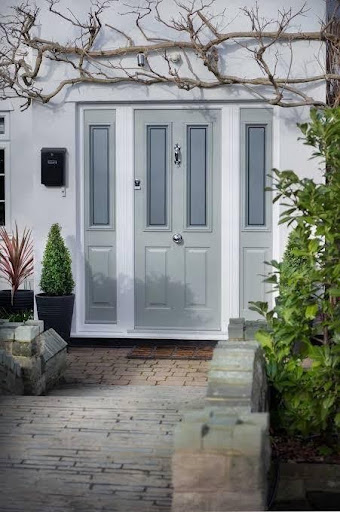
You can choose from a wide range of designs, including traditional panelled styles, modern minimalist designs and doors inspired by classic timber entrances.
Colour is another major selling point.
Popular choices include:
- Anthracite grey
- Black
- White
- Cream
- Navy blue
- Green
- Red
- Oak-effect finishes
- Walnut-effect finishes
- Contemporary grey tones
Some homeowners choose a colour that complements their windows, while others deliberately choose a contrasting shade to make the entrance stand out.
And then there is the glazing.
A narrow vertical glass panel can give a door a very different appearance from a large central window. Decorative glass can add a traditional feel, while simple obscure or clear glazing can work beautifully with contemporary designs.
Your door can be a subtle finishing touch, or a genuine feature of the property.
Do Composite Doors Need Much Maintenance?
This is another area where composite doors have an advantage over traditional timber.
Timber doors can look fantastic, but they generally need more attention. Depending on the finish and exposure to weather, they may need cleaning, painting, staining or other maintenance over time.
Composite doors are generally much easier to live with.
Routine maintenance will normally involve keeping the door and frame clean, checking seals and looking after the hardware.
That does not mean “fit it and forget it”, though.
A few simple habits can help keep your door looking and performing its best:
Clean it regularly.
Dirt and grime can build up around the frame, seals and hardware.
Look after the locks and hinges.
Follow the manufacturer’s recommendations for lubrication and maintenance.
Check the seals.
If you notice draughts or difficulty closing the door, the seals may need attention.
Don’t force the handle.
If the locking mechanism suddenly feels stiff, get it checked rather than repeatedly forcing it.
Small maintenance jobs can prevent bigger problems later.
Composite vs uPVC Doors
So, how does a composite door compare with uPVC?
Both can be good options, but they have different characteristics.
uPVC doors have been popular for decades because they are affordable, low-maintenance and widely available.
Composite doors tend to have a more substantial construction and often provide a more premium appearance and feel.
There can also be a noticeable difference in design options, particularly if you want a door that closely resembles traditional timber.
However, composite doors can cost more than standard uPVC doors.
That means the right choice depends on your priorities and budget.
If keeping the initial purchase price as low as possible is your main concern, uPVC may be worth considering. If you are looking for a combination of appearance, robustness, insulation and long-term performance, a composite door may be more suitable.
Composite vs Timber Doors
Timber has an appeal that is difficult to replicate.
A beautifully made wooden door can add character and charm to a property, particularly on older or period homes.
However, timber requires more maintenance than most modern composite doors.
Exposure to rain, sunlight and changing temperatures can cause timber to swell, shrink or deteriorate if it isn’t properly maintained.
Composite doors can recreate much of the traditional appearance while reducing the maintenance involved.
That makes them particularly appealing to homeowners who like the look of timber but don’t want another job to add to the weekend DIY list.

How Much Do Composite Doors Cost?

There isn’t one simple answer.
The cost of a composite door depends on a number of factors, including the manufacturer, door size, design, colour, glazing, hardware, frame and installation.
A basic door will naturally cost less than a highly customised entrance with decorative glass and premium hardware.
It is also important to compare like for like when looking at quotations.
A price that initially appears cheaper may not include everything you need.
When getting quotes, check whether the price includes:
- The door itself
- Frame
- Glass
- Locks and handles
- Threshold
- Removal of the existing door
- Disposal
- Installation
- Any necessary adjustments to the opening
- Finishing work
It is much easier to compare suppliers when you know exactly what you are paying for.
Don’t Underestimate the Importance of Installation
This is one of the most important points to remember.
You can spend a considerable amount of money on a high-quality composite door, but poor installation can undermine its performance.
The door needs to be correctly aligned, sealed and secured. The frame needs to be properly fitted, and the locking system needs to operate correctly.
A professional installer should also check the existing opening and identify any issues before installation begins.
Ask your installer about their experience, guarantees and relevant qualifications. It is also worth checking exactly what is covered by the installation warranty and what is covered by the manufacturer’s product warranty.
Choosing the Right Composite Door
With so many options available, choosing a door can actually be harder than it sounds.
Start with the basics.
1. Think about the style of your property
A sleek anthracite door might look fantastic on a contemporary home, while a traditional cottage may suit a more classic panelled design.
There are no hard rules, but the architecture of the property can be a useful starting point.
2. Consider the colour carefully
Don’t choose a colour solely because it is fashionable.
Think about your brickwork, render, windows, roof and surrounding landscaping.
Remember that you will probably be looking at the door for many years.
3. Choose glazing that suits your needs
Glazing can dramatically change the appearance of a door.
If privacy is important, obscure glass may be preferable to clear glass. Decorative glass can add character, while larger glazed areas can make an entrance feel brighter.
4. Pay attention to the hardware
Handles, letterplates, knockers and hinges might seem like small details, but they can completely change the finished look.
For a traditional door, classic hardware can work beautifully. For a modern property, minimalist hardware may be the better choice.
5. Don’t forget the back door
Composite doors aren’t just for the front of the house.
They can also be used for side entrances, utility rooms and back doors where security, insulation and durability are important.
Are Composite Doors Worth It?
For many homeowners, the appeal comes down to the combination of benefits.
A good composite door can offer the traditional appearance of timber, the low-maintenance qualities of modern materials, improved insulation and strong security.
It is also something you see every single day.
A new kitchen might be a major investment, but your front door is one of the first things you see when you arrive home and one of the first things visitors see when they arrive.
Getting the design right can make a surprisingly big difference to the overall appearance of your property.
That said, it is important not to choose purely on appearance.
Look at the construction, security specification, thermal performance, warranty and installation as well as the colour and design.
The Bottom Line
A front door needs to do more than simply look good.
It needs to protect your home, cope with the British weather, help keep your home comfortable and continue looking good year after year.
Composite doors have become popular because they bring many of these qualities together in one package.
Whether you want a traditional oak-effect entrance, a bold contemporary colour or something simple and understated, there is likely to be a composite door design to suit your home.
Take your time, compare specifications rather than just prices, and choose an experienced installer. The right composite door should not only improve your home’s kerb appeal, it should be something you can rely on every time you close the door behind you.
And perhaps that is the real appeal of a good composite door.
It looks the part, feels solid, keeps the weather where it belongs and quietly gets on with the job.